No products in the cart.
Tesamorelin Peptide
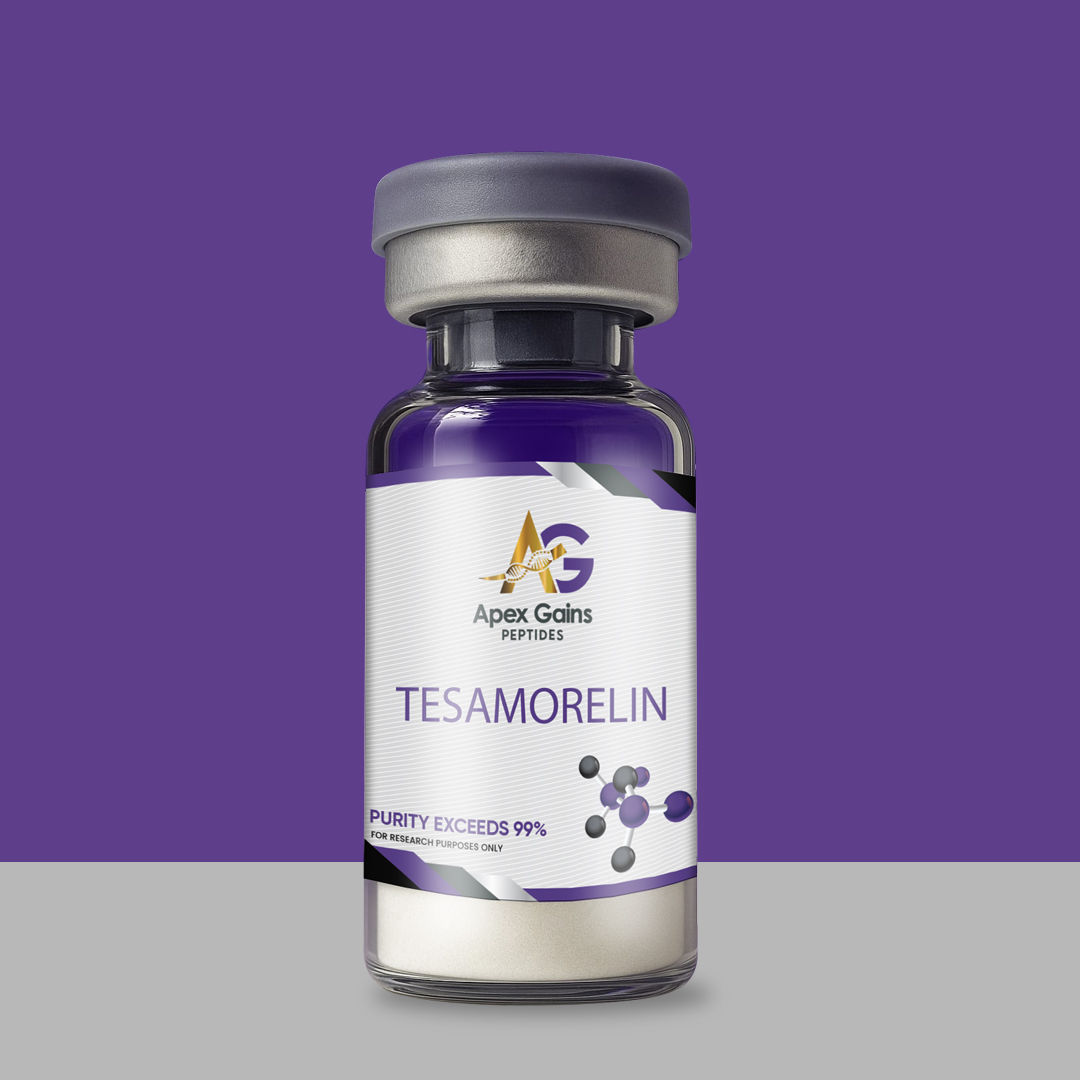
Tesamorelin is a synthetic 44-amino acid growth hormone-releasing hormone (GHRH) analog with an N-terminal hexenoyl modification, supplied in lyophilized form strictly for in vitro laboratory experimentation, GHRH receptor signaling assays, and neuroendocrine pathway research models.
-
Physical Form: Lyophilized solid / cake
-
Purity Standard: ≥ 98% (HPLC-MS verified)
-
Storage: Store sealed at -20°C; protect from light and moisture
Strictly for laboratory research use only. Not for human or veterinary administration.
Price range: $120.00 through $250.00
Description
Tesamorelin is a stabilized synthetic analog of human growth hormone-releasing factor (GRF 1-44). It features an identical 44-amino acid sequence to endogenous GHRH, modified at the N-terminus with a trans-3-hexenoic acid moiety to enhance resistance against enzymatic cleavage by dipeptidyl peptidase-4 (DPP-4). It is supplied strictly for in vitro GHRH receptor (GHRHR) binding kinetics, adenylate cyclase activation and cAMP generation assays, somatotroph pulsatile release modeling, and laboratory metabolic and lipolytic signaling research models. Supplied as a stable lyophilized powder suitable for analytical reconstitution.
Technical Specifications
-
Chemical Name / Synonym: Tesamorelin / [trans-3-hexenoyl]-GHRH (1-44) amide / TH9507
-
Molecular Formula: C221H366N72O67S
-
Molecular Weight: 5135.86 g/mol
-
Physical Form: Lyophilized solid / cake
-
Purity Grade: ≥ 98.0% (analytical verification via HPLC-MS)
-
Storage Conditions: Store sealed at -20°C in a dry environment protected from light. Keep desiccated until experimental reconstitution.
Analytical Quality & Testing Every production batch undergoes analytical screening via HPLC and Mass Spectrometry to confirm chemical identity, sequence fidelity, and purity standards. Batch-specific Certificates of Analysis (CoA) and analytical testing records are maintained on file and available to qualified laboratories upon request.
LABORATORY RESEARCH USE ONLY This biochemical reagent is manufactured and distributed strictly for in vitro laboratory experimentation, diagnostic assay development, and analytical testing. It is not a drug, dietary supplement, therapeutic agent, cosmetic, or food product. Not for human, animal, or clinical administration, consumption, injection, or veterinary application. Must be handled exclusively by qualified personnel adhering to standard chemical laboratory safety protocols.